 Image 1 of 3
 Image 2 of 3
 Image 3 of 3
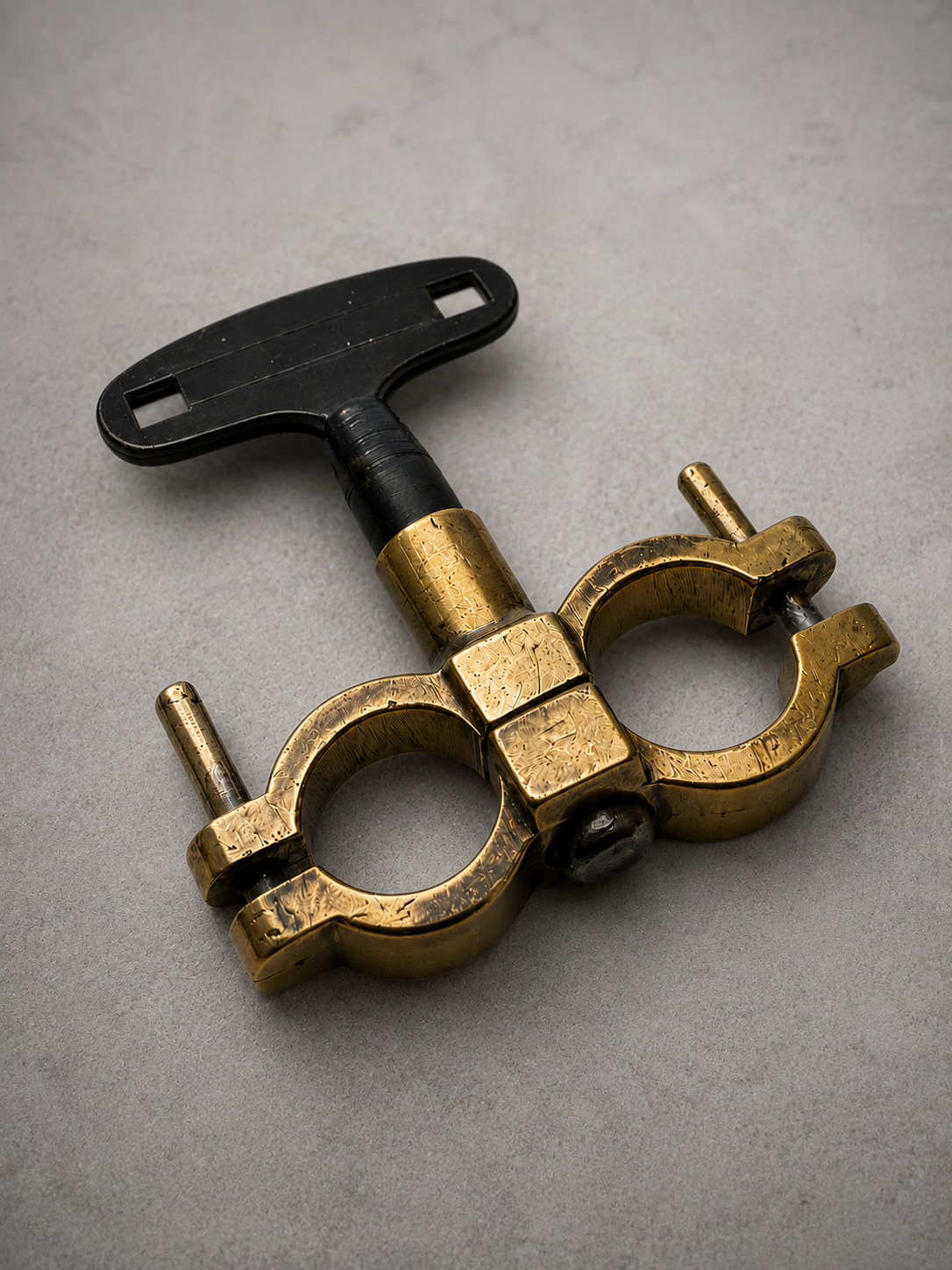
An exceptionally rare surviving example of late 18th-century thumb cuffs, dating to the Georgian period. Unlike conventional handcuffs, thumb cuffs were designed to restrain an individual by locking the thumbs together, creating intense discomfort and limiting movement with a remarkably compact device. They were often carried by constables, jailers, and watchmen as a practical means of controlling prisoners before the widespread adoption of standardized handcuffs in the 19th century. Examples from this period are seldom encountered today. Their small size meant they were frequently lost, discarded, or worn beyond use, making genuine 18th-century survivors particularly desirable among collectors of policing, crime, and punishment artefacts. Many known examples reside in museum collections, with relatively few remaining in private hands. Crafted entirely by hand, these cuffs represent a fascinating transitional period in law enforcement history, when restraint devices were produced by local blacksmiths rather than industrial manufacturers. Each surviving example bears subtle differences in construction, reflecting the individuality of their maker and the absence of standardised production methods. Over two centuries old, this piece serves as a tangible reminder of Georgian justice and the realities of law enforcement during a period of significant social and political change. Objects of this nature are increasingly difficult to acquire, making them highly sought after by serious collectors of early policing and penal history.
An exceptionally rare surviving example of late 18th-century thumb cuffs, dating to the Georgian period. Unlike conventional handcuffs, thumb cuffs were designed to restrain an individual by locking the thumbs together, creating intense discomfort and limiting movement with a remarkably compact device. They were often carried by constables, jailers, and watchmen as a practical means of controlling prisoners before the widespread adoption of standardized handcuffs in the 19th century. Examples from this period are seldom encountered today. Their small size meant they were frequently lost, discarded, or worn beyond use, making genuine 18th-century survivors particularly desirable among collectors of policing, crime, and punishment artefacts. Many known examples reside in museum collections, with relatively few remaining in private hands. Crafted entirely by hand, these cuffs represent a fascinating transitional period in law enforcement history, when restraint devices were produced by local blacksmiths rather than industrial manufacturers. Each surviving example bears subtle differences in construction, reflecting the individuality of their maker and the absence of standardised production methods. Over two centuries old, this piece serves as a tangible reminder of Georgian justice and the realities of law enforcement during a period of significant social and political change. Objects of this nature are increasingly difficult to acquire, making them highly sought after by serious collectors of early policing and penal history.